
Clinical Hair Fall Treatment in Trichy
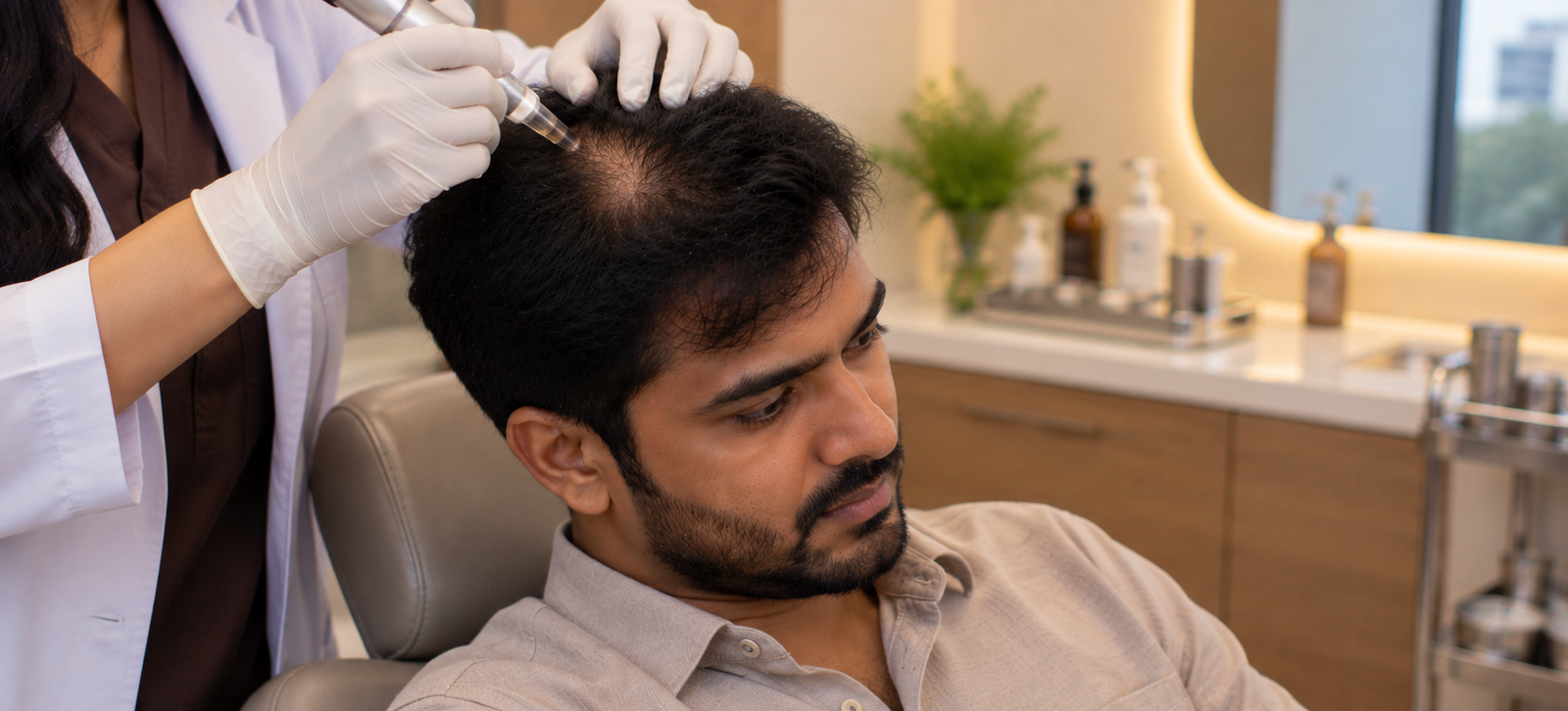
Excessive daily hair shedding or gradual thinning rarely has a single cause. It often stems from overlapping triggers such as iron or vitamin deficiencies, acute physical or emotional stress, thyroid disorders, hormonal shifts, scalp inflammation, or post-fever recovery.
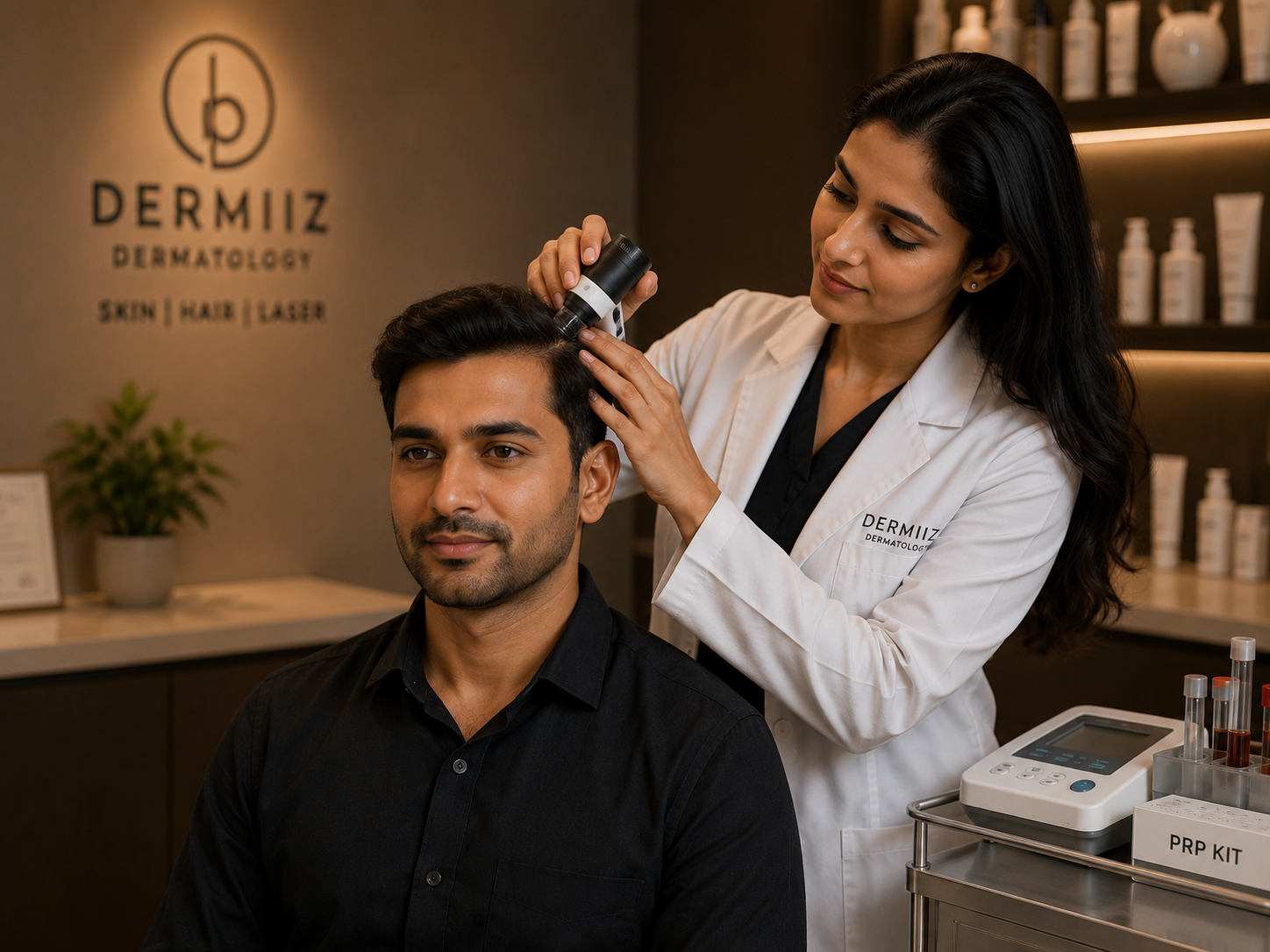
At DermiiZ Skin & Hair Clinic in Thillai Nagar, Trichy, our MD dermatologists and trichologists—Dr. M. Amrithaa (MD, DVL) and Dr. S. Shenbagaraj (MD, DVL)—perform digital trichoscopy scalp analysis to examine follicular density, hair shaft diameter, and scalp health. Rather than offering generic topical kits, we build a medical treatment plan tailored to your blood markers, hormone profile, and hair growth cycle.
Hair loss conditions we treat
Accurate diagnostic mapping by a hair doctor in Trichy ensures targeted medical treatment rather than trial-and-error hair oils.
Telogen Effluvium (Sudden Shedding)
Diffuse, rapid shedding triggered by acute stress, viral fever, surgery, crash dieting, or childbirth, managed with targeted telogen effluvium treatment.
Nutritional & Deficiency Hair Fall
Diffuse hair weakening linked to low serum ferritin (iron), Vitamin D3, Vitamin B12, zinc, or protein deficits, corrected through nutritional hair fall therapy.
Hormonal & Endocrine Hair Losss
Progressive thinning driven by thyroid imbalance (hypo- or hyperthyroidism), PCOS, insulin resistance, or androgen sensitivity.
Early-Stage Follicular Thinning (Pattern Hair Loss)
Gradual miniaturization of hair follicles in men and women that requires early dermatological care to slow progression and preserve hair density.
Benefits of Dermatologist-Led Hair Fall Care
Controls excessive shedding, supports active follicle growth, and improves hair shaft caliber through evidence-based treatment.
Reduced Shedding & Improved Hair Density
Helps stabilize the hair growth cycle by supporting the anagen (active growth) phase and reducing premature follicular entry into the resting phase.
Gradual reduction in daily hair shedding typically observed within 6 to 12 weeks of consistent treatment.
Supports stronger hair shafts and healthier scalp microcirculation when combined with in-clinic therapies like PRP or GFC.
Customized medical nutrition, prescription topicals, and targeted scalp care matched to your diagnostic results.
Frequently Asked Questions About Hair Fall Treatment
Clear, dermatologist-verified answers to common questions about hair shedding, diagnosis, and medical treatment at our Thillai Nagar clinic.