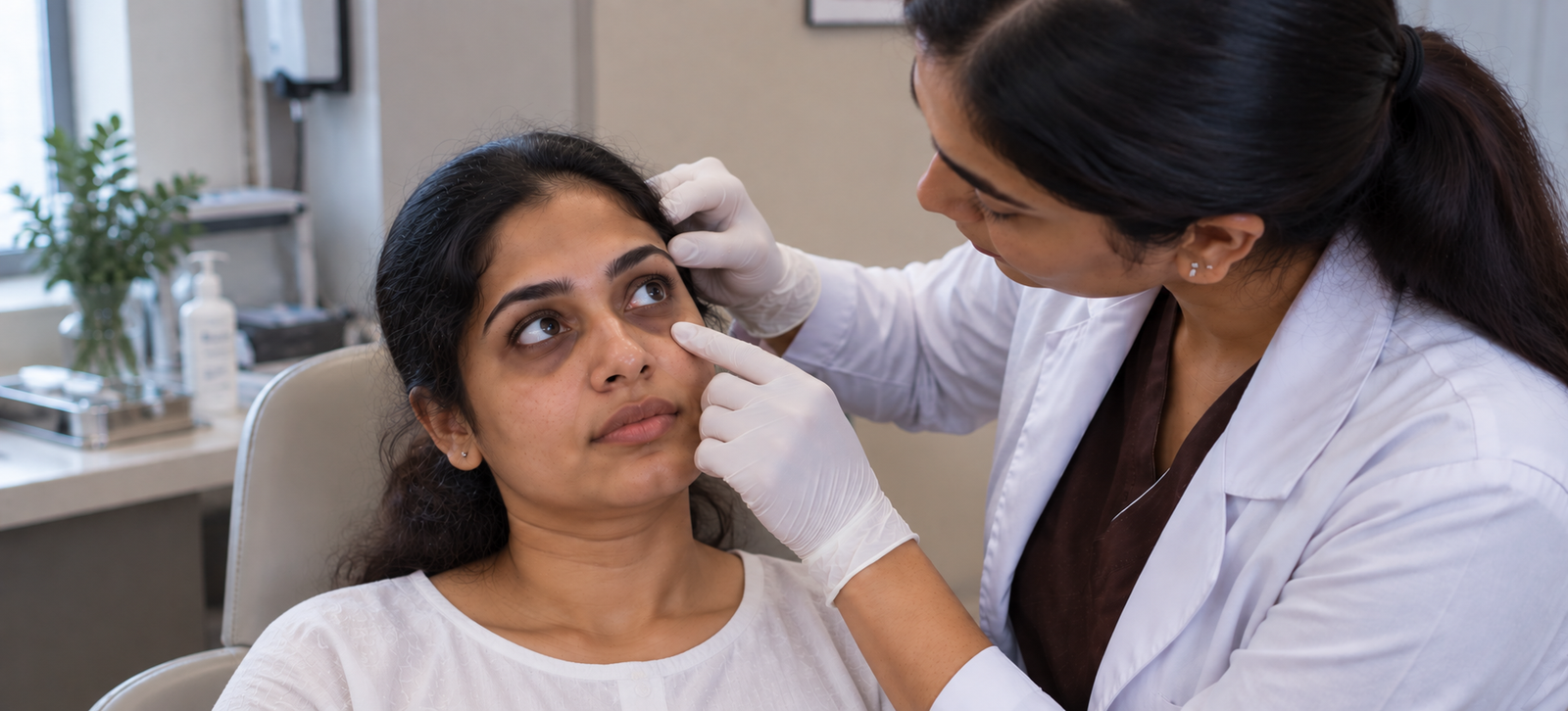
Dermatologist-Led Dark Circles Treatment in Trichy
The skin around the eyes is the thinnest on the human body, with minimal subcutaneous fat above the underlying muscle and blood vessels. This delicate structure makes the lower eyelids especially prone to visible vascular pooling, melanin accumulation (periorbital hyperpigmentation), and shadow-casting volume loss.
At DermiiZ Skin & Hair Clinic in Thillai Nagar, Trichy, our MD, DVL dermatologists evaluate the exact anatomical cause of your under-eye circles—whether excess pigment, tear trough hollowing, vascular congestion, or a combination of factors—to design a safe, individualized treatment plan.
Causes of Under-Eye Dark Circles We Address
Because under-eye dark circles often involve more than one factor, an in-person clinical assessment determines whether excess melanin, visible blood vessels, structural hollowing, or skin laxity is the primary driver.
Pigmentary Periorbital Darkening
Excess dermal or epidermal melanin caused by genetics, UV exposure, atopic allergies, or chronic eye rubbing.
Structural Tear Trough Hollowing
Deep under-eye shadows caused by inherited facial anatomy, ligament tethering, or age-related fat pad and bone volume loss.
Vascular Bluish-Purple Pooling
Retain existing content ("Sluggish microcirculation and visible blood vessels showing through delicate, translucent skin.")—no change needed.
Under-Eye Fine Lines & Crepiness
Retain existing content ("Collagen depletion and dehydration causing fine wrinkling and micro-shadowing.")—no change needed.
Benefits of Targeted Under-Eye & Tear Trough Treatment
Medical and procedural treatments tailored to your skin type, eyelid anatomy, and underlying cause.
Cause-Specific Periorbital Care
Targets excess epidermal pigment and supports dermal collagen remodeling with protocols calibrated for Indian skin tones.
Softens tear trough hollows and reduces overhead shadowing under the eyes.
Improves dermal support to reduce the visibility of bluish vascular pooling.
Smooths under-eye fine lines, crepiness, and uneven skin texture.
Frequently Asked Questions About Dark Circles Treatment
Clear answers from our dermatologists on managing periorbital hyperpigmentation, vascular dark circles, and tear trough hollowing at our Thillai Nagar clinic.
Over-the-counter eye creams containing caffeine, peptides, or mild retinoids can hydrate the skin and temporarily reduce mild morning puffiness or superficial dullness. However, topical creams cannot replace lost structural volume in deep tear troughs, clear deep dermal melanin, or fully conceal prominent blood vessels. Persistent dark circles require a dermatologist assessment to pair prescription topicals with targeted in-clinic procedures.
When dark shadows are caused by structural volume loss or ligament tethering rather than skin pigment, surface creams and peels have limited effect. Depending on the depth of the hollow and skin quality, dermatologists typically recommend hyaluronic acid (HA) dermal fillers for tear trough correction, cellular skin boosters (such as PDRN), or collagen-stimulating therapies to smooth the lower eyelid–cheek transition.
Yes, when performed by a qualified MD dermatologist using protocols calibrated for the periorbital area and Indian skin tones. For laser procedures, specialized intraocular or corneal eye shields are used to protect the eyes, and wavelengths are carefully selected to minimize thermal injury or post-inflammatory hyperpigmentation. For chemical peels, mild, controlled formulations (such as low-strength lactic or arginine-based peels) are applied strictly within safe anatomical margins.
The number of sessions depends on the underlying cause and chosen modality. Chemical peels, laser toning for periorbital hyperpigmentation, and injectable skin boosters generally require a series of 3 to 6 sessions spaced 3 to 4 weeks apart for gradual, measurable improvement. Tear trough filler correction often shows immediate contour improvement after a single session, followed by a review visit. Your dermatologist will outline a realistic timeline during your initial consultation.
No aesthetic or dermatological treatment permanently stops natural aging, UV exposure, or genetic predisposition. Tear trough fillers typically last between 9 and 18 months depending on the product and individual metabolism, while pigment reduction from peels or lasers requires ongoing sun protection, allergy management, and medical home care to prevent recurrence. Periodic maintenance sessions help sustain long-term improvement.